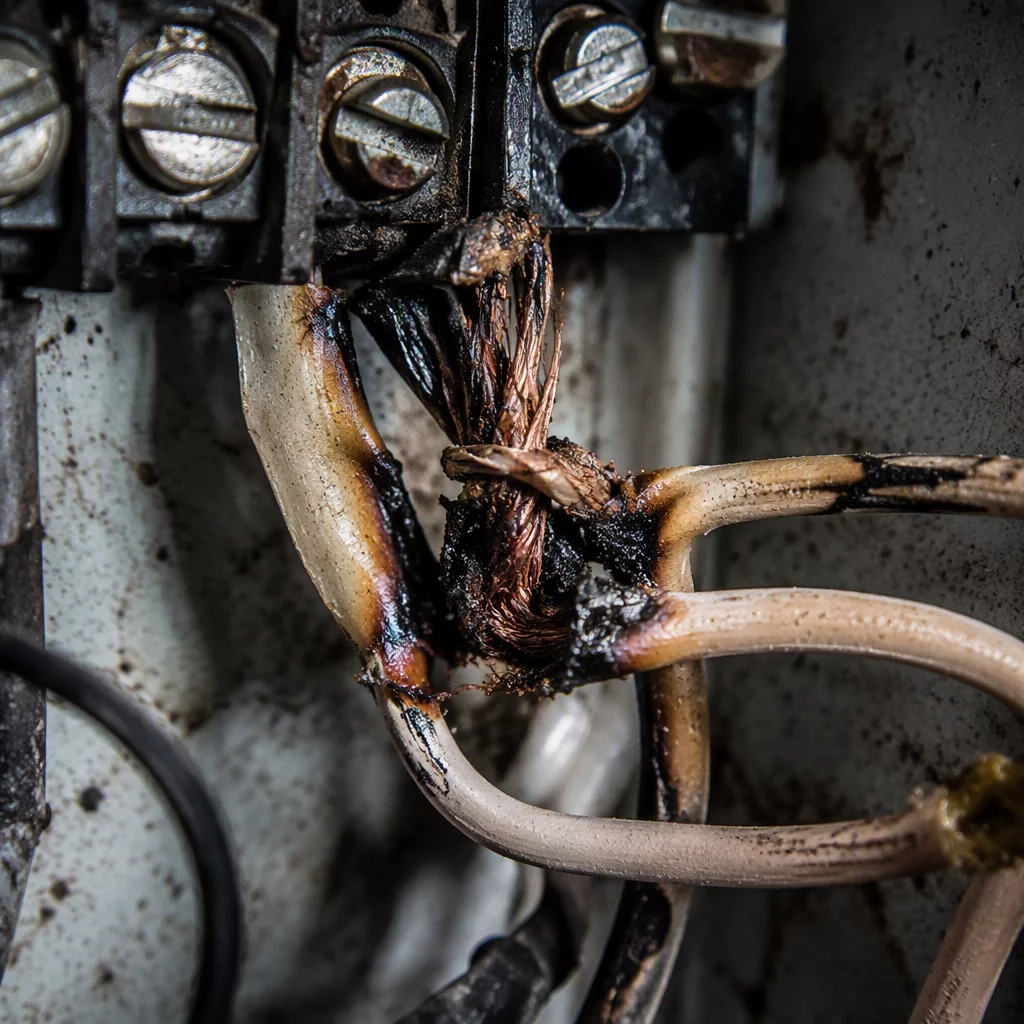
Between the mid-1960s and the late 1970s, soaring copper commodity prices prompted builders across the world to install solid single-strand aluminum wiring in residential homes. While aluminum remains an effective bulk conductor in high-voltage utility distribution networks when paired with specialized high-torque lugs, its mechanical behavior in smaller domestic branch circuits introduces continuous fire risks over extended operating lifespans.
Thermal Creep and Terminal Relaxation Hazards
The primary hazard of residential aluminum conductors stems from their thermal expansion coefficient, which is approximately thirty percent greater than copper. Every time a kettle, space heater, or vacuum cleaner draws load through a circuit, the wire expands significantly. When the load stops, it cools down and contracts. Over decades of continuous thermal cycling, this creeping movement deforms the wire, creates physical gaps at screw terminals, and results in loose electrical junctions.
Unlike copper oxide which remains mildly conductive, aluminum oxide forms an insulating ceramic-like barrier that drastically increases electrical resistance, generating extreme localized temperatures that ignite adjacent framing materials.
Key Indicators of Deteriorating Aluminum Wiring
Because aluminum oxidation occurs invisibly behind switchplates and inside junction enclosures, homeowners frequently miss early warning indicators until serious thermal damage has already compromised the device box:
- Unexplained warm wall switch plates or scorched outlet faceplates during ordinary power usage.
- Intermittent light flickering across several rooms that is not linked to utility grid fluctuations.
- Faint buzzing, crackling, or persistent ozone and burning plastic odors originating near junction boxes.
Attempting temporary fixes with standard wire nuts is exceptionally dangerous because standard connectors accelerate galvanic corrosion between dissimilar metals. Qualified remediation involves either professional copper pigtailing using specialized cold-weld compression connectors or executing a comprehensive whole-home rewire with modern multi-core copper cable and arc fault detection devices (AFDD).
Discussion & Reviews
2 Verified ContributionsVery informative article on the risks. We uncovered old aluminum branch lines behind our kitchen splashback during an appliance renovation and arranged an immediate replacement before connecting high-draw induction equipment.
Thanks for the detailed breakdown. The thermal expansion point explains exactly why our lighting switches were occasionally buzzing under load. We have scheduled an EICR inspection.
Leave a Comment
Share your experience or ask a question regarding circuit specifications.