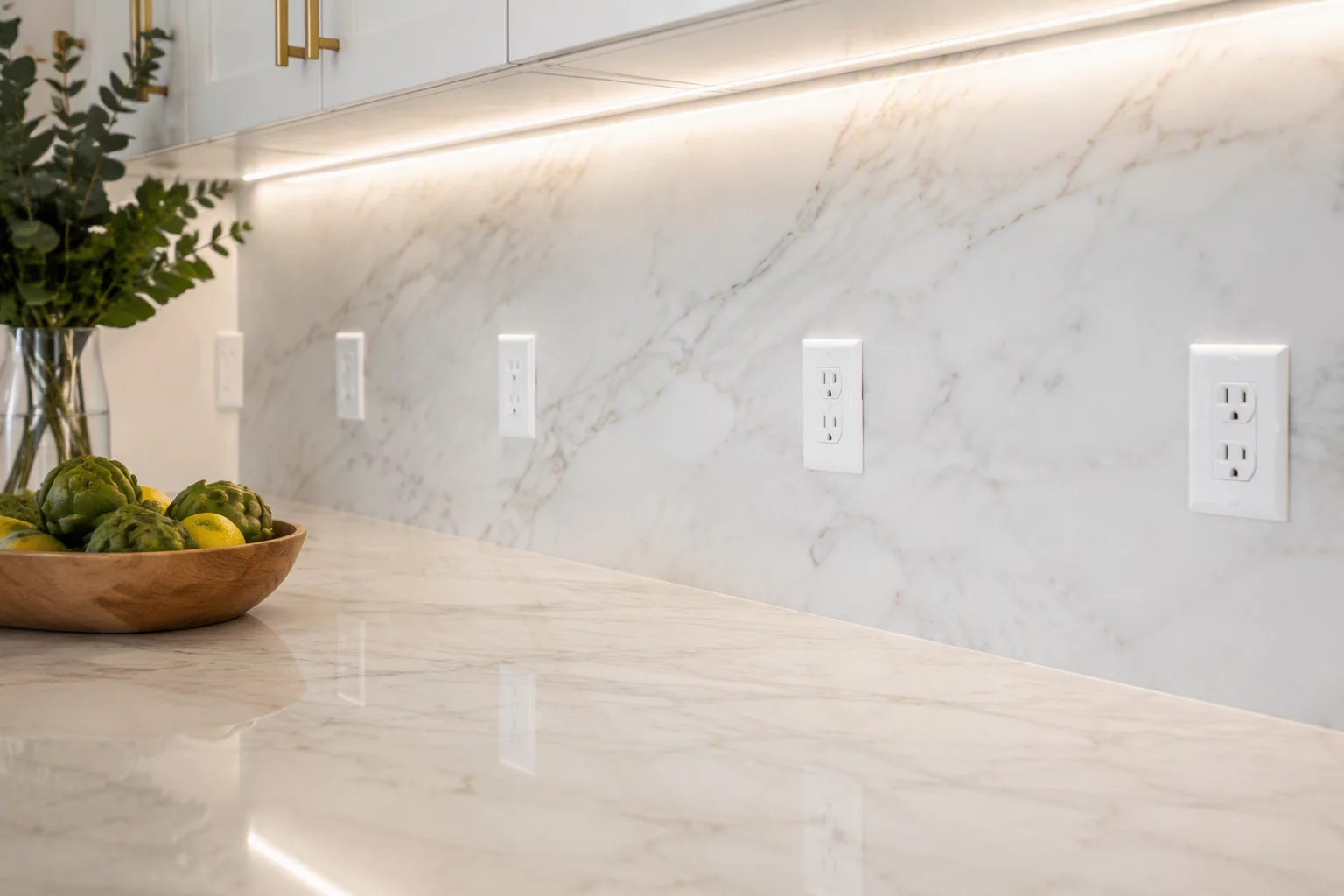
Modern culinary spaces place unprecedented thermal and electrical demands on household infrastructure. In this residential project, the homeowner undertook an extensive kitchen renovation incorporating a 7.4kW induction cooktop, double convection steam oven, integrated multi-zone dishwasher, and an array of high-wattage countertop appliances. The legacy domestic installation shared socket outlets with adjoining utility spaces on a single overloaded 32A ring, frequently triggering circuit breaker trips during peak breakfast and evening cooking routines.
Engineering Safe Cable Pathways & Dedicated Isolation
To resolve the supply bottleneck permanently without unnecessary disruption to freshly plastered walls, our certified electrical team engineered structured concealed containment paths. Using ceiling service bulkheads and discrete cabinet access channels, heavy-gauge low-smoke halogen-free (LSOH) copper conductors were routed directly back to the main consumer unit. We split the kitchen load across four independent dedicated runs, ensuring complete thermal stability and zero cross-device voltage fluctuations.
"Separating high-draw cooking appliances from general countertop ring circuits eliminates conductor overheating and ensures compliance with modern BS 7671 standards."
AFDD Protection & Technical Specifications
Given the continuous resistive and inductive switching profiles of contemporary kitchen equipment, arc-fault mitigation is critical. Each newly commissioned kitchen circuit was fitted with an individual Type A AFDD RCBO module at the distribution board, providing comprehensive short-circuit, residual earth leakage, and dangerous micro-arc detection.
- 32A Dedicated Radial Circuit wired in 6.0mm² twin and earth cable for the induction cooktop.
- Two independent 20A radial countertop circuits for air fryers, microwave, and espresso stations.
- Individual Type A 30mA RCBO and AFDD micro-breaker units for total fault segregation.
Following full accessory fit-off and point-to-point terminations, our engineers conducted comprehensive dead and live testing routines. Insulation resistance yielded optimal readings above 200 MΩ, and earth fault loop impedance (Zs) verified rapid disconnection times well inside mandated regulatory thresholds. Complete Electrical Installation Certificates (EIC) and building control notifications were finalized on-site.
No comments yet. Be the first to leave a comment on this project!