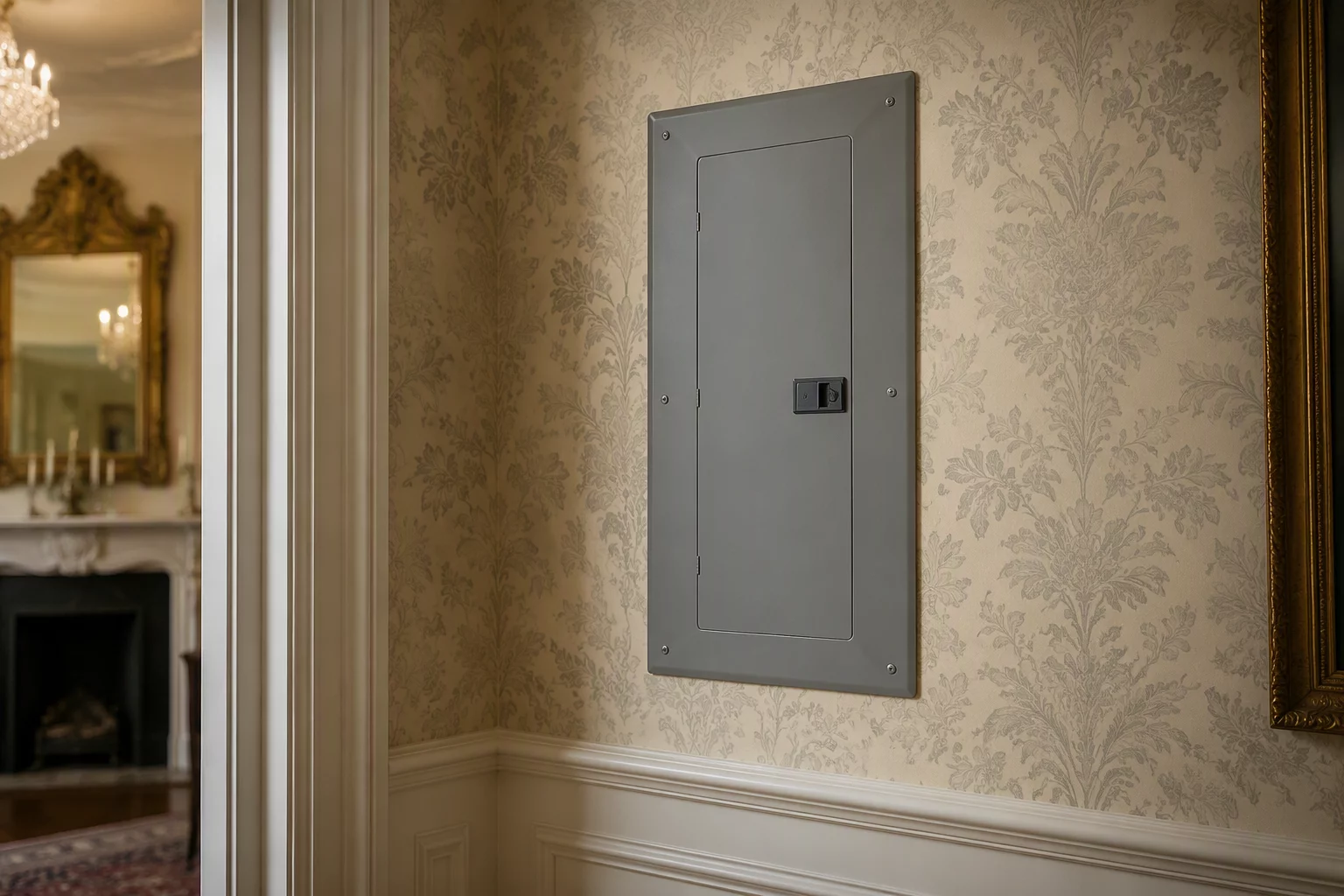
Upgrading electrical distribution in a Victorian residence presents distinct engineering challenges. Period architectural detailing, lath-and-plaster wall construction, and layers of historical electrical modifications demand meticulous planning. This project focused on decommissioning an obsolete, ungrounded fuse box and replacing it with a robust 200-amp dual RCD consumer unit equipped with individual Arc Fault Detection Devices (AFDDs), ensuring full compliance with modern BS 7671 safety standards while safeguarding original interior finishes.
Overcoming Historic Infrastructure Limitations
The primary obstacle in this Victorian residence was the presence of mixed vintage wiring, including brittle rubber insulation remnants and undersized feeder cables running through tight floor cavities. Our team initiated extensive insulation resistance and loop impedance testing to isolate degraded segments. Rather than tearing down decorative plaster mouldings, we utilized existing chase channels and subfloor cavities to pull zero-halogen low-smoke copper cables directly to the new central enclosure.
Preserving 19th-century architectural elegance requires modern electrical systems to be installed with surgical precision and unobtrusive containment.
Advanced Safety & Capacity Specifications
Modern domestic power requirements—from induction cooking to electric heat pumps—far exceed the load capabilities of vintage installations. We engineered dedicated radial lines alongside modern split-ring configurations to distribute high-wattage loads efficiently across multiple protected zones.
- 200A Dual RCD Consumer Unit with Type A surge protection (SPD) installed in main distribution hub.
- Independent AFDD micro-breakers assigned to all bedroom, living area, and concealed historic circuits.
- Comprehensive earth bonding installed to gas and water intake pipes with high-conductance copper leads.
Following the hardware changeover, full diagnostic verification confirmed optimal trip times, zero nuisance leakage currents, and stable voltage delivery across every outlet. An Electrical Installation Certificate (EIC) was issued alongside local building control sign-off, providing the homeowner with complete peace of mind and decades of reliable, safe electrical performance.
Discussion & Reviews
0 CommentsNo comments yet. Be the first to leave a comment regarding this project.
Leave a Comment
Share your experience or ask a question regarding circuit specifications.